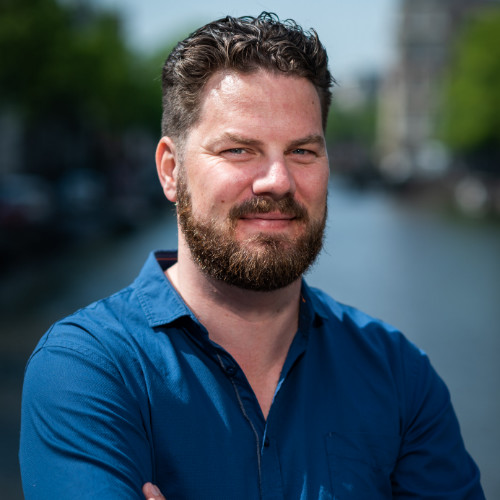
Meet the Expert - Mauro Palsgraaf: Eight years of growing up in software
How a software developer who started his career at 21 found that building great software is really about building great teams.
Series introduction: In this “Meet the Experts” blog series, OpenValue developers share who they are, what drives them, and what makes working at OpenValue different. In this edition we meet Mauro Palsgraaf, a senior software developer at OpenValue Utrecht. He joined the company straight out of university, left for a year and a half, and came back. That return says more than any testimonial could.

Spotted on Twitter, hired over coffee
Mauro was 21 when he finished his Bachelor degree in Software Engineering. He already had part-time experience at Avisi and ltp and worked as a graduate intern at Sogeti, so he wasn’t a complete newcomer. But a full-time consulting career at that age? That’s not a standard career path.
The connection with OpenValue started the way many good things in this industry start: at a software development conference. During his second year of his studies, Mauro attended J-Fall for the first time. J-Fall is the biggest Java conference of the Netherlands and is organized by the NLJUG (Dutch Java User Group). On stage was Bert Jan Schrijver, OpenValue’s CTO and JUG Lead of the NLJUG. For an 18-year-old just getting into the Java world, watching someone perform on a stage like that left an impression.
“I saw Bert Jan on stage at J-Fall and thought: this guy has it figured out. Later I heard he’d started his own company, called OpenValue. That’s when I knew I wanted to work there.”
Through a mutual connection at his graduation internship, the dots connected. Bert Jan and Roy Wasse had spotted Mauro on Twitter, noticed a photo with Uncle Bob, and reached out. The conversation that followed was short and the match was mutual.
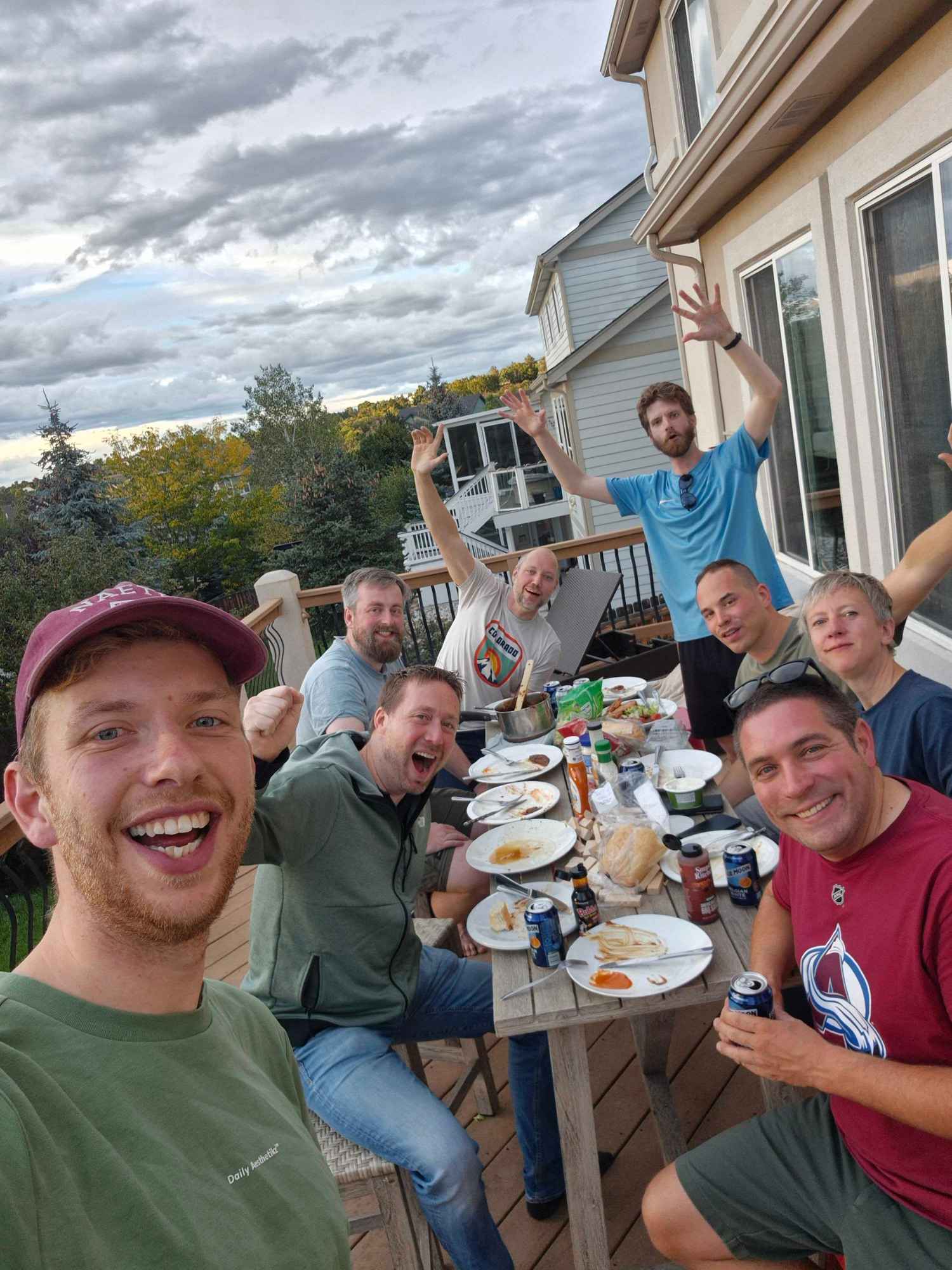 Mauro in Colorado Springs USA with the OpenValue Utrecht team
Mauro in short
When asked to describe himself in three words, Mauro doesn’t hesitate: enthusiastic, critical, and “gezellig” (no translation possible into English). The first two define his work. The third defines everything around him.
“At work, I set high standards. For myself and for others. In my free time, I’m lighter and more relaxed. I think that balance is important.”
That self-awareness runs through everything Mauro does. He knows he’s not the stereotypical developer who prefers headphones over conversation. He’s outspoken, social, and get energitic when there are people around him. He sees that as a strength. Sometimes that can lead to tension, but it’s always authentic.
“I don’t think I’m the stereotypical software developer. I think that brings both advantages and challenges. But I’ve always been comfortable speaking my mind.”
Why he left and why he returned to OpenValue
Mauro spent several years at OpenValue, then left for a year and a half. He worked elsewhere and started his pre-master study programme. It was an important step for him to take in his career. He wanted to see what was out there and invest in his academic development.
When he came back, it wasn’t because the grass was greener elsewhere. It was because of something specific that OpenValue does differently.
“They listen. Really listen. I’m quite stubborn and I find it hard when people tell me what to do. At OpenValue, Roy and Bert Jan genuinely hear what I want and what I don’t want. If I don’t want an assignment for specific reasons, there’s no fight. There’s no pressure. They simply respect it.”
That trust is the foundation for him. Mauro is clear about the fact that he never imagined himself enjoying consultancy. The variety of clients, the switching between contexts, the constant adaptation. None of that came naturally. But in an environment where autonomy and trust are real, not just words on a wall, consulting turned out to suit him after all.
The project that made him most proud
When asked which project he’s most proud of, Mauro doesn’t need to think long: the FIOD (the Dutch fiscal intelligence and investigation service) that’s part of the Dutch Tax Authority. He spent four years there; his longest assignment by far.
What made it special wasn’t prestige, but it was the blank canvas. When the team started, almost nothing was in place. No centralised logging, no automated CI/CD pipelines and no standard observability tooling. Everything had to be built from scratch.
“At large organisations, like a bank for example, a lot of infrastructure is already abstracted away. At the FIOD, we had to set up everything ourselves. That’s what made it cool. Instead of using existing tooling, you’re deciding how to build it.”
Over four years, Mauro saw the platform grow from those early foundations into a mature product. He contributed ideas, initiated improvements, and helped shape technical standards. Not as a solo act, but as part of a team of enthusiastic developers who shared both the building of the software and the celebrating of the deliveries.
“If I look at where I had the most impact, it was the FIOD. Not individually, but as a team. When looking back at where we started and where we ended up, I’m proud of the part I played.”
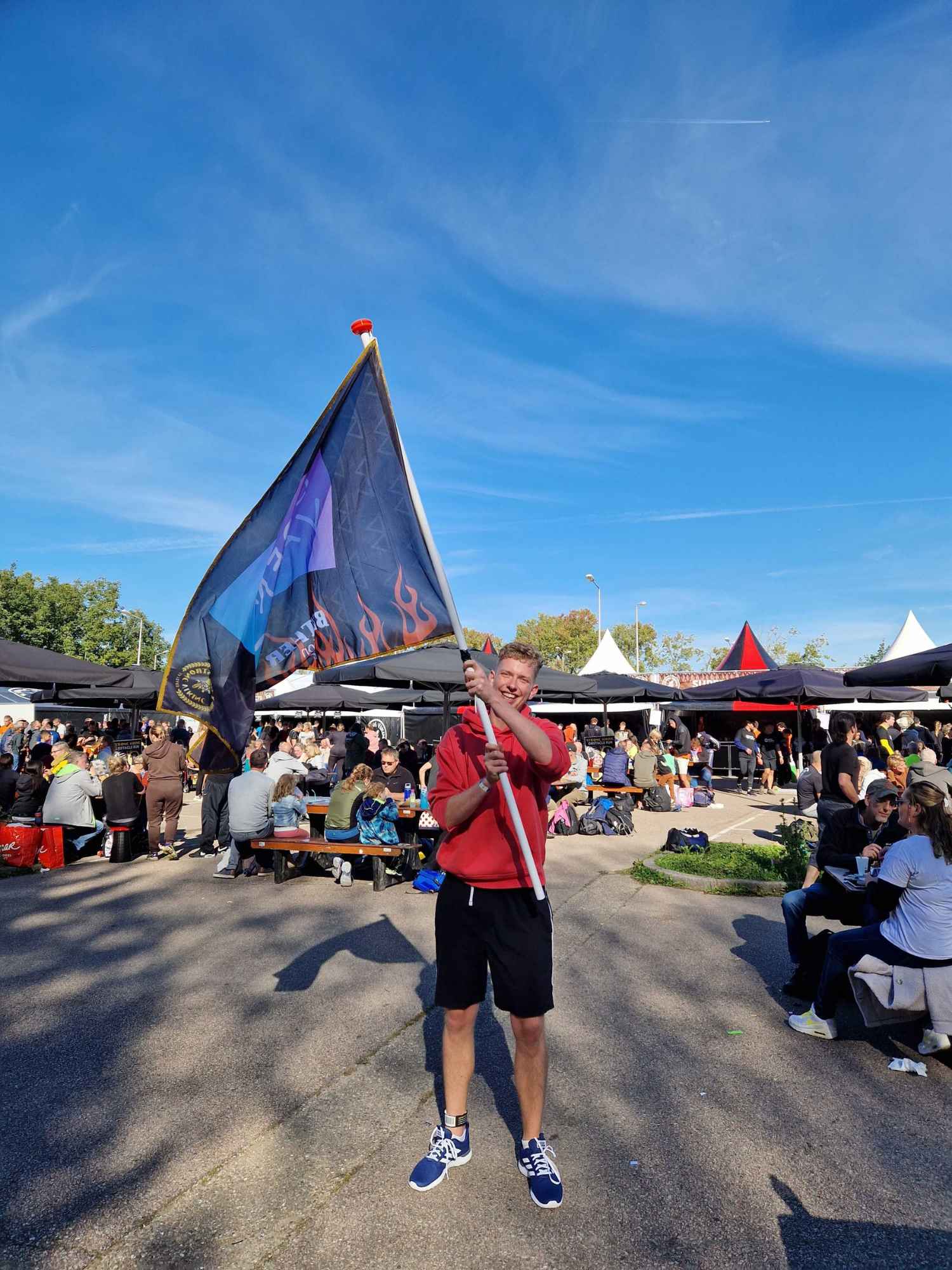 Mauro at an obstacle run with OpenValue flag
Software is a team sport
Ask Mauro what he enjoys most about his work and the answer comes instantly: teamwork.
“I don’t enjoy building software alone. I’ve done it, but it’s not for me. What I love is working with the team. Setting standards together and making agreements about how we want our code to look. Building something and seeing users happy with what you have build. And then of course celebrating that together.”
It’s a conviction that runs counter to the popular image of the lone developer with headphones in a dark room. Mauro knows that image exists. He just doesn’t recognise himself in it.
“People who aren’t in IT probably think software development is much less social than it actually is. The teamwork and the fun are real!”
That belief in the collective extends beyond project teams. At OpenValue, knowledge sharing isn’t a side activity, but it’s part of the culture. Mauro regularly helps colleagues who ask for feedback or guidance. Not as a mentor, but just as someone who’s always willing to share what he knows.
“If someone has the drive to improve, I’ll always make time. Drop everything and help. That’s how it should be.”
Keeping AI on a short leash
Mauro is currently at BMG, working on a rebuild of a legacy netting platform that dates back to 2002. Netting is the financial process of consolidating transactions between subsidiary companies to reduce currency exchange costs and settlement complexity. A challenging domain with real deadlines.
Beyond his client work, AI has become his biggest interest. Together with colleague Tom Wigleven, he recently developed and delivered the AI Integration for Java Developers training at OpenValue. Building that training opened his eyes to the sheer speed of AI development.
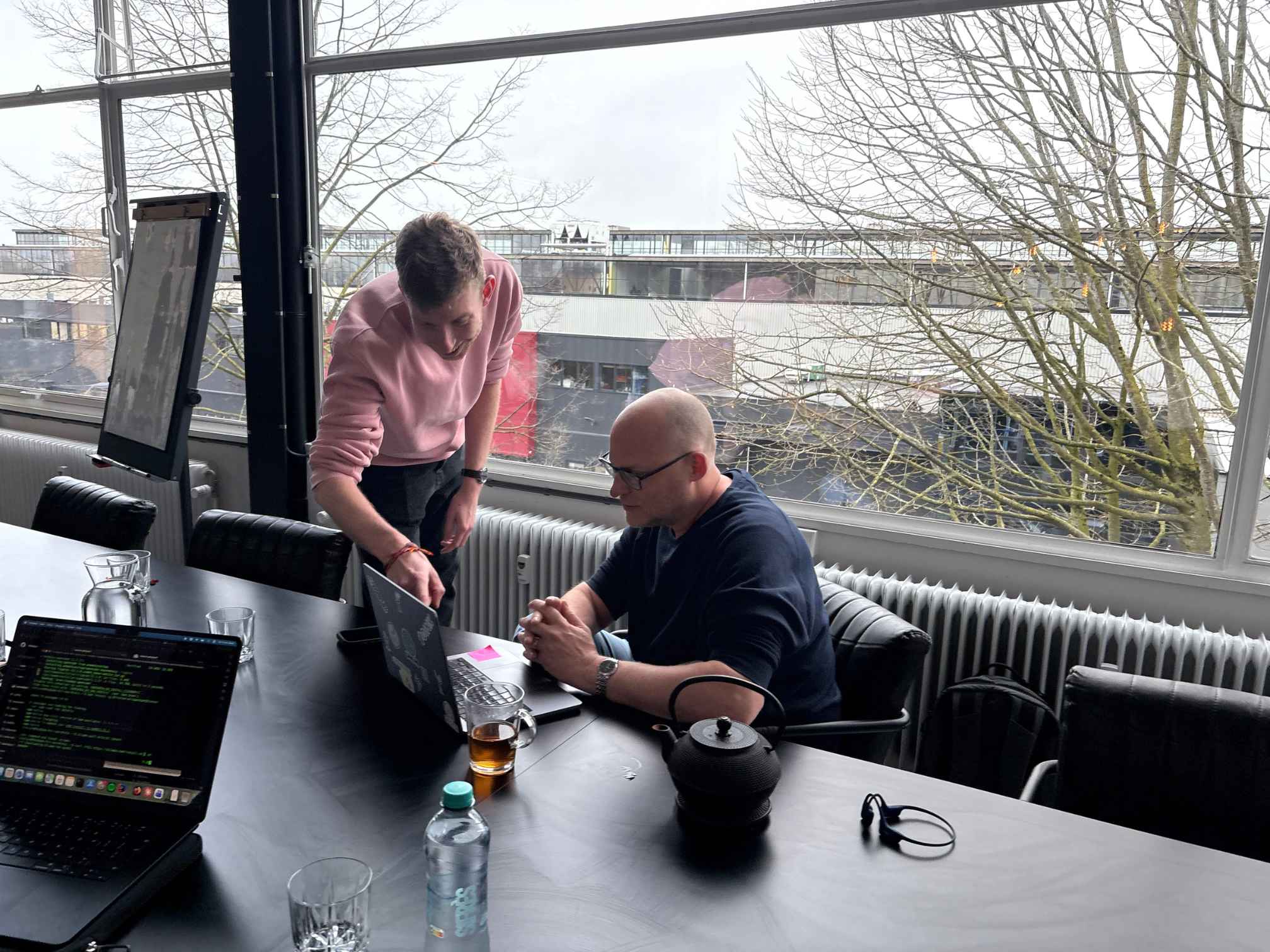 Mauro hosting the AI integration for developers training
“The pace of AI development was even faster than I thought. And I was already paying close attention.”
His approach to AI in daily development is characteristically Mauro: enthusiastic, but critical. He uses AI tools actively, but keeps them on a tight leash.
“I don’t trust it enough (yet) to let it build everything. I check every piece of output. If I let it generate too much at once, the code drifts. Small, controlled pieces work much better. I want to stay in the driver’s seat of my project.”
He’s not afraid AI will replace developers, but he is honest about a different concern.
“I’m not worried about losing my job. I’m worried about my job becoming less fun. The teamwork and the technical craft are what make this work enjoyable. I hope those stay important enough to keep the profession meaningful for me.”
Mauro the backpacker
Outside of work, Mauro is an frequent traveller. Not the package-holiday kind to a Spanish beach, but the solo-backpacking-through-Patagonia kind. He’s covered large parts of South America, Central America, and Southeast Asia. Nepal and India are next on his travel wishlist.
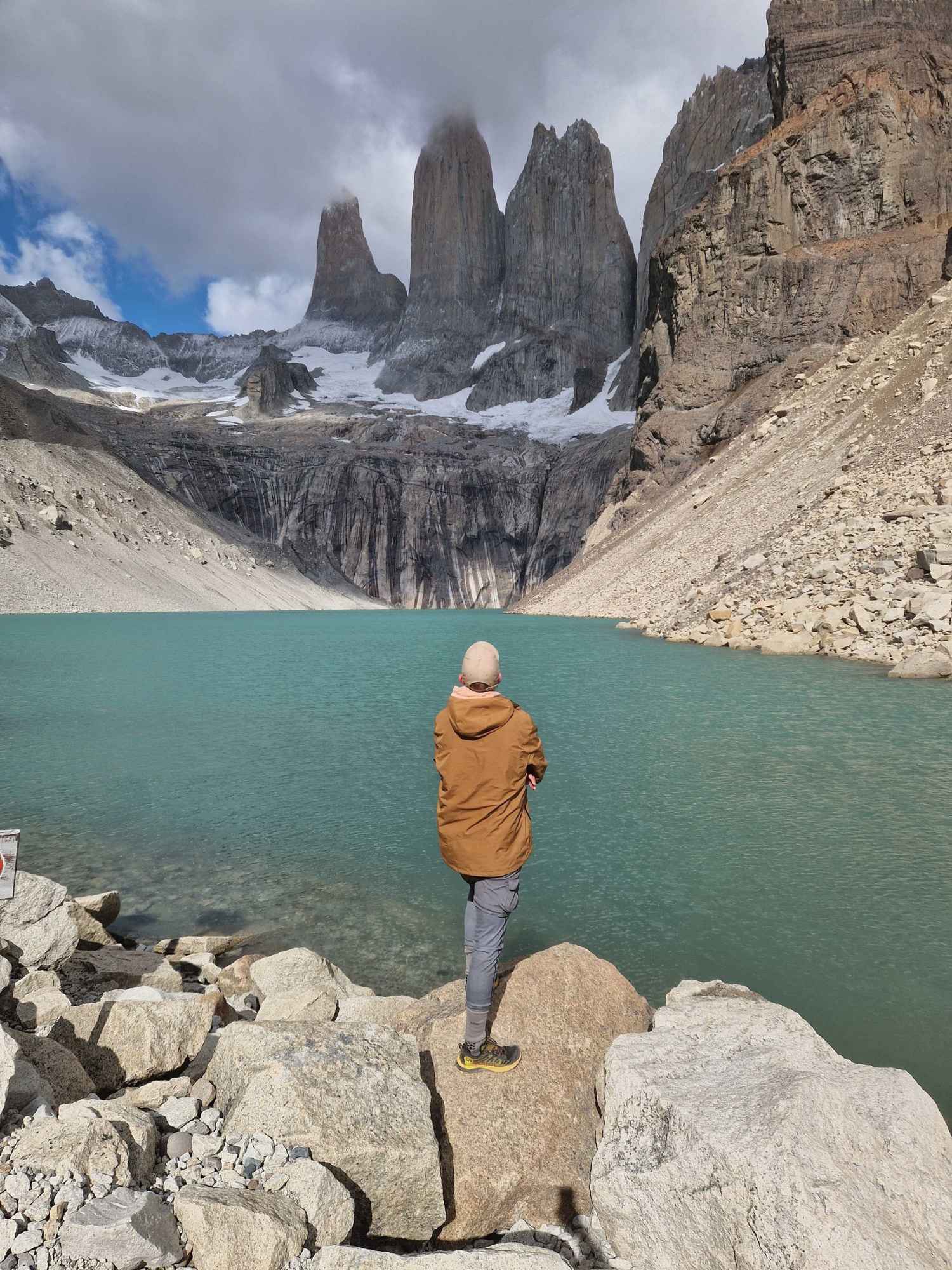 Mauro backpacking in Patagonia in South-America
“The thing I love about solo travel is that you constantly meet new people. Different types of people than you’d normally encounter in your daily life and work. I become less critical, more open-minded and some of those random conversations turn out to be the most interesting ones.”
It’s a mindset that translates directly to his work. The curiosity and the willingness to engage with the unfamiliar. The belief that the best things happen when you step outside of what’s comfortable.
Advice to his 21-year-old self
If Mauro could step into a time capsule and talk to his younger self, the message would be simple.
“Relax and have a little confidence in yourself. It’s all going to be fine. Don’t stress so much. Life is a lot more fun when you’re not constantly doubting yourself. And if today isn’t great? Tomorrow is a new day.”
His message to anyone considering OpenValue? “Do it. The people at OpenValue are great. The bond you can build with colleagues is real, if you invest in it. There are plenty of social events and team outings. You’re never forced into assignments you don’t want. They actually listen and if you want to learn from your colleagues, there’s space for that.”
Mauro Palsgraaf is a senior Java developer at OpenValue Utrecht, currently on assignment at ING. He recently co-developed and delivered the AI Integration for Java Developers training.
This is the third article in the “Meet the Experts” series. Read the previous ones: Simone de Gijt and Sascha Selzer.
Interested in joining OpenValue? Visit openvalue.eu/career.
Want to level up your skills? Explore the OpenValue training portfolio — by developers, for developers.